
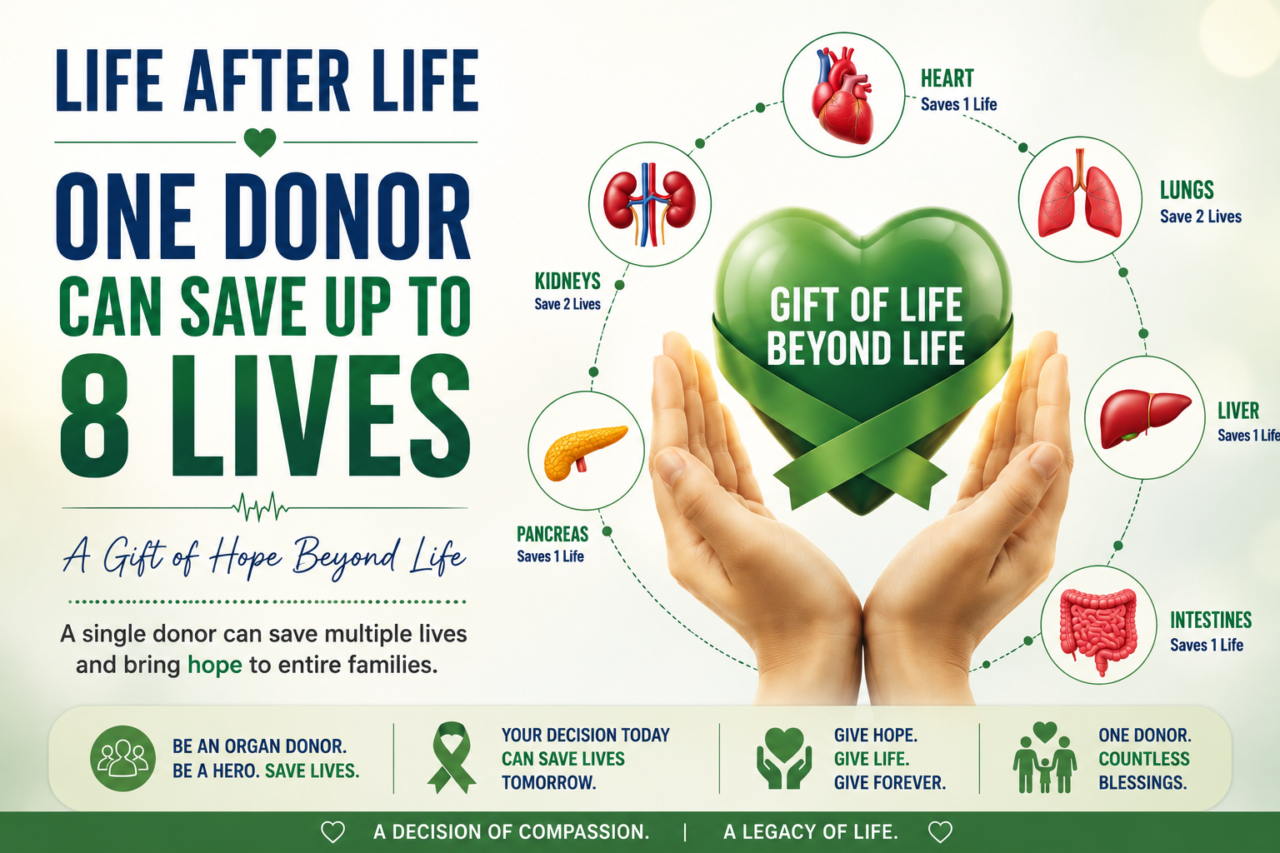
One Donor Can Save Up To Eight Lives
Every day, thousands of patients and families face the reality of end-stage organ failure. For many, a transplant represents their only chance at survival. Yet countless patients never receive that opportunity because suitable organs are simply not available.
To address this critical challenge, Pakistan Kidney and Liver Institute (PKLI) recently hosted a landmark scientific seminar titled “Life After Life: The Power of Organ Donation”, bringing together medical experts, transplant specialists, policymakers, religious scholars, donor families, recipients, and healthcare leaders to discuss how Pakistan can move from awareness to action regarding deceased organ donation.
A Growing Need Across Pakistan
Pakistan has made significant progress in living donor kidney and liver transplantation. Thousands of lives have been saved through the generosity of family members willing to donate a kidney or a portion of their liver.
However, certain life-saving transplants—including heart, lung, and pancreas transplantation—depend largely on organs donated after death. Without a strong deceased organ donation program, many patients continue to wait without hope of receiving the organs they need.
According to transplant experts, the burden of organ failure in Pakistan continues to grow due to increasing rates of kidney disease, liver disease, diabetes, hypertension, and other chronic illnesses.
The Message Behind “Life After Life”
The PKLI seminar focused on a simple but powerful message: one person’s decision can save multiple lives.
The event explored the medical, ethical, legal, religious, and social aspects of deceased organ donation. Topics included brain death diagnosis, donor management, family consent, legal frameworks, hospital responsibilities, public awareness, and Islamic perspectives on organ donation.
Prof. Dr. Saeed Akhtar, Chairman of the Board of Governors at PKLI, opened the seminar by addressing the burden of organ failure in Pakistan, the importance of deceased donation, and the role healthcare institutions must play in creating awareness and building effective donation systems.
Why Deceased Organ Donation Matters
A single deceased donor has the potential to save up to eight lives through organ transplantation while improving many more lives through tissue donation.
Patients suffering from heart failure, lung disease, liver failure, kidney failure, and other life-threatening conditions may receive a second chance at life because of one family’s decision to donate.
Around the world, deceased organ donation has transformed transplant medicine and provided hope to thousands of families. Experts participating in the PKLI seminar shared international experiences and successful models from countries that have built effective donation programs through public awareness, hospital engagement, and family support.
Organ Donation and the Islamic Perspective
One of the most important discussions during the seminar focused on the ethical and Islamic perspectives of organ donation. Religious scholars participated in the event to help address common questions and misconceptions regarding donation after death.
Many scholars and medical experts agree that saving human life is among the greatest acts of compassion and service. Organ donation offers an opportunity to continue benefiting others even after one’s lifetime.
For many families, this gift becomes a form of Sadaqah Jariyah—an ongoing charity whose impact continues long after a person’s passing.
Human Stories of Hope
One of the most moving parts of the seminar featured donor families and transplant recipients sharing their personal experiences. Their stories demonstrated the profound impact organ donation can have—not only on patients, but on entire families and communities.
Behind every transplant is a story of courage, sacrifice, generosity, and hope.
These stories remind us that organ donation is not simply a medical procedure. It is a gift that can restore health, reunite families, and create opportunities for patients to live full and meaningful lives.
From Awareness to Action
The goal of the “Life After Life” initiative is not only to educate but to inspire action.
Building a culture of organ donation requires conversations within families, communities, hospitals, and faith communities. It requires awareness, understanding, and a shared commitment to helping those in need.
As Pakistan continues to advance in transplantation medicine, greater public awareness of deceased organ donation will be essential to expanding access to life-saving treatments and giving more patients the opportunity for a second chance at life.
A Lasting Legacy
One donor can save multiple lives.
One decision can transform the future of several families.
And one act of generosity can become a legacy that lives on long after a person’s lifetime.
Sources & Acknowledgments
This article was prepared using information from:
- Pakistan Kidney and Liver Institute (PKLI)
- PKLI Scientific Seminar: Life After Life – The Power of Organ Donation (June 10, 2026)
- Prof. Dr. Saeed Akhtar, Chairman Board of Governors, PKLI
- Prof. Dr. Faisal Saud Dar, Dean, PKLI
- Public reporting by Vitals News on organ donation awareness and transplantation in Pakistan
- Public educational reporting regarding organ donation awareness and transplantation in Pakistan
Learn more about PKLI: https://pkli.org.pk
