info@discoversouls.org
Subscribe to SMS Updates: (850) 308-3944
Supporting 190,000+ Patients Through Pakistan Kidney Institute (PKI)
When a baby is coming, families prepare many things: the hospital bag, clothes, medicines and transport for the day of delivery.
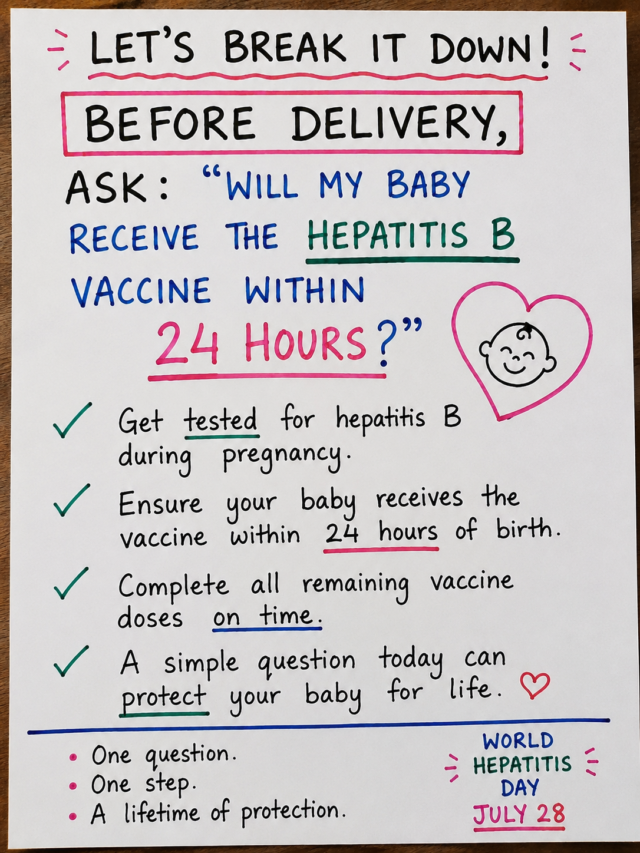
One question is often missed:
“Have I been tested for hepatitis B, and will my baby receive protection soon after birth?”
Hepatitis B can pass from a mother to her baby during delivery. When infection happens during infancy, it is much more likely to become lifelong and may later lead to serious liver disease. WHO recommends hepatitis B testing during pregnancy so that protection for both mother and baby can be planned early.
WHO recommends that every baby receive the first hepatitis B vaccine as soon as possible after birth, preferably within 24 hours, followed by the remaining childhood doses. The 2026 World Hepatitis Day guidance also calls for routine hepatitis B testing during antenatal care and timely vaccination of newborns.
When a pregnant woman tests positive, her doctor may order further tests. Depending on the results, antiviral medicine during pregnancy may also be advised to lower the chance of passing the virus to the baby.
This should be discussed during pregnancy—not for the first time after the baby is born.
Pakistan’s national childhood immunization programme currently provides hepatitis B–containing vaccine doses at 6, 10 and 14 weeks. These doses are free and remain important for completing the child’s protection.
However, a study published in the Journal of the Pakistan Medical Association in January 2026 reported that the separate hepatitis B birth dose had not yet been introduced nationwide. It has been available through some provincial programmes and selected hospitals, so families should not assume that every delivery centre keeps it.
The same study showed that timely vaccination can work when the vaccine is kept inside the delivery ward. At two public hospitals in Islamabad, 2,000 of 2,008 newborns received the birth dose, and almost all were vaccinated within the first hour after delivery.
That is why asking before delivery is so important.
At the next antenatal visit, ask:
“Have I been tested for hepatitis B?”
Then ask the hospital:
“Do you provide the hepatitis B birth dose within 24 hours, including at night and on weekends?”
When the mother has hepatitis B, ask the doctor to clearly explain:
The birth dose does not replace the later doses at 6, 10 and 14 weeks. Parents should keep the vaccination card and complete the full schedule.
A mother living with hepatitis B does not need blame or fear. She needs respectful care and a clear plan made before delivery.
One question asked at the right time may protect a child for life.
This article is part of the SOULS World Hepatitis Day educational series supporting prevention, testing and timely care for families in Pakistan.