info@discoversouls.org
Subscribe to SMS Updates: (850) 308-3944
Supporting 190,000+ Patients Through Pakistan Kidney Institute (PKI)
When one person in a family is diagnosed with hepatitis, the concern often spreads quickly through the whole home.
Can my spouse get it? What about my children? Should we stop sharing meals or sitting together?
The answer depends on the type of hepatitis and the kind of exposure involved.
For hepatitis B and hepatitis C, simply living in the same home does not mean the infection will automatically spread. Families need to understand the real routes of transmission and take the precautions that actually matter.
Protect the family with facts—not fear.
A hepatitis diagnosis should not become a reason to isolate someone from their family.
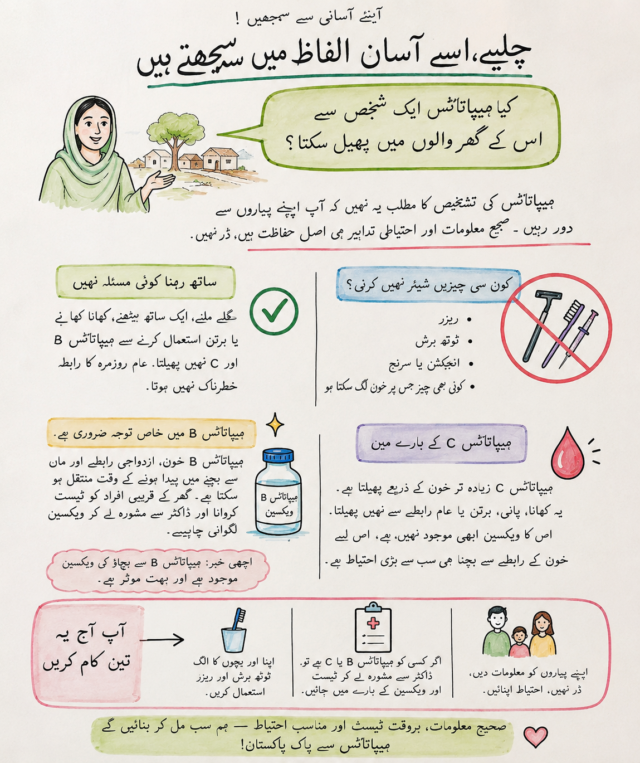
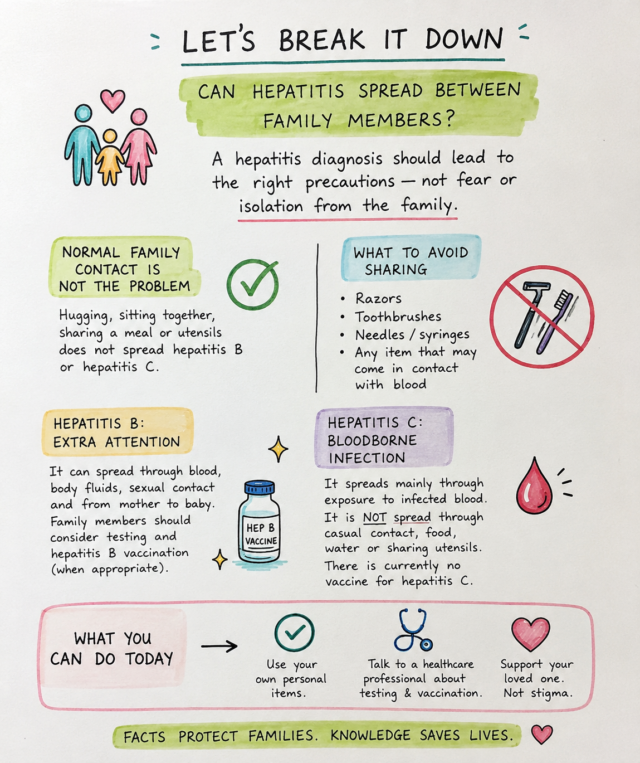
Hepatitis B and hepatitis C are not spread through ordinary casual contact such as hugging, holding hands, or simply spending time together. Hepatitis C is also not spread through food, water, or sharing eating utensils.
The person diagnosed still needs family support.
What families need is accurate information and practical precautions.
The main concern is exposure to infected blood and, particularly with hepatitis B, certain body fluids.
Even small amounts of blood may remain on personal items. For this reason, family members should not share:
Sharing razors and toothbrushes is a recognized, although less common, route of hepatitis B exposure. Hepatitis C is primarily bloodborne, so avoiding contact with infected blood remains central to prevention.
These precautions are simple, but they matter.
Hepatitis B requires particular attention because it can spread through infected blood and body fluids, sexual contact, and from mother to baby around the time of birth.
If a family member has hepatitis B, household and sexual contacts should speak with a qualified healthcare professional about testing and hepatitis B vaccination, when appropriate.
The important advantage is that hepatitis B is vaccine-preventable. WHO identifies vaccination as a key measure for preventing hepatitis B infection.
A diagnosis in one family member can therefore become an opportunity for the whole family to better understand their health and take appropriate preventive steps.
Hepatitis C is primarily spread through exposure to infected blood.
It does not spread through normal daily contact such as hugging, holding hands, or sharing food and drinks. There is currently no vaccine for hepatitis C.
The practical message for families is straightforward:
Avoid blood exposure. Do not share personal items that may carry blood. Seek medical advice about testing if there may have been a possible exposure.
If someone in my family has hepatitis, I should stay away from them.
A hepatitis B or hepatitis C diagnosis is not a reason to isolate a family member. Normal family contact is not the usual route of transmission. Families should learn which virus is involved and follow the precautions relevant to that infection.
If one person in the family has hepatitis, everyone must have it.
No. One person’s diagnosis does not mean the entire family is infected. However, depending on the type of hepatitis and possible exposure, a healthcare professional may recommend testing or hepatitis B vaccination for certain family members.
Pakistan’s National Hepatitis Strategic Framework 2024–2030 places prevention and improved access to testing, care, and treatment among the country’s key priorities.
But awareness also begins inside the home.
When families respond with fear, a person living with hepatitis may face unnecessary stigma and isolation. At the same time, the precautions that truly matter may be overlooked.
Knowing the facts helps families focus on the right actions: avoid blood exposure, do not share certain personal items, seek testing when appropriate, consider hepatitis B vaccination based on medical advice, and support the person who has been diagnosed.
That is how information becomes prevention.
If someone in your family is diagnosed with hepatitis, do not let fear decide how you treat them.
Find out which type of hepatitis they have. Learn how that virus spreads. Take the right precautions. Speak with a qualified healthcare professional about whether family members should be tested or vaccinated.
Protect the family with facts—not fear. Support the person. Take the right precautions.
Together, informed families can help move Pakistan closer to one goal: a Hepatitis-Free Pakistan.
This article is part of our World Hepatitis Day educational series, inspired by Prof. Dr. Saeed Akhtar’s long-standing commitment to hepatitis elimination in Pakistan.