info@discoversouls.org
Subscribe to SMS Updates: (850) 308-3944
Supporting 190,000+ Patients Through Pakistan Kidney Institute (PKI)
One of the most common questions after learning about hepatitis is:
“Should I get tested?”
The answer depends on your health history and possible exposure, but one thing is clear: many people living with hepatitis do not know they are infected.
Hepatitis B and hepatitis C can remain silent for years. During this time, the virus may slowly damage the liver without causing noticeable symptoms. This is why testing plays such an important role in early diagnosis and timely treatment.
A simple blood test can determine whether someone has hepatitis B or hepatitis C. Knowing your status is the first step toward protecting your health and, if needed, receiving appropriate medical care.
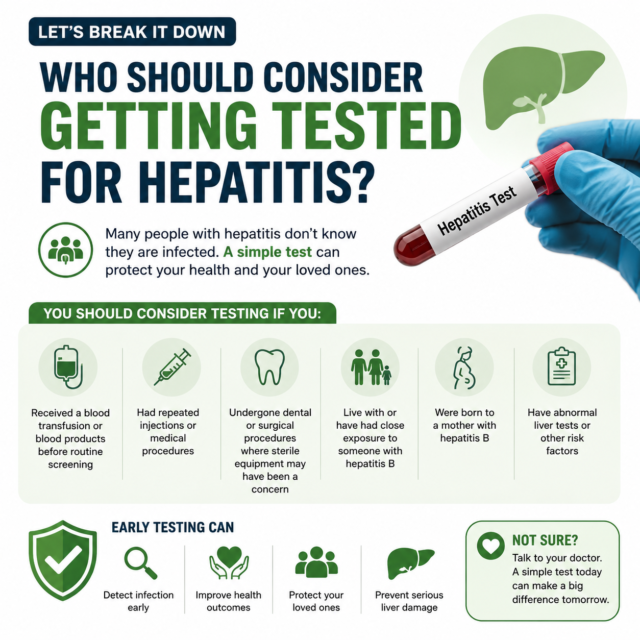
Testing may be appropriate for people who have certain risk factors or possible exposures. You should speak with a healthcare professional about hepatitis testing if you:
Testing recommendations vary from person to person. A healthcare professional can help determine which tests are appropriate based on your individual circumstances.
One of the challenges with hepatitis is that symptoms often appear only after liver damage has progressed.
Early testing can:
For hepatitis C, early diagnosis is especially important because effective treatments can cure most people. For hepatitis B, early diagnosis allows regular monitoring and treatment when indicated, helping reduce the risk of long-term liver complications.
I feel healthy, so I don’t need to be tested.
Many people with hepatitis B or hepatitis C have no symptoms for years. A person can feel completely well while the virus continues to affect the liver.
Testing is only necessary if someone is already sick.
Testing is most valuable before symptoms develop. Early diagnosis creates more opportunities for appropriate care and better long-term outcomes.
Testing is more than a laboratory result—it is an opportunity to detect infection early, access appropriate medical care, and reduce the impact of hepatitis on individuals, families, and communities.
Increasing awareness about testing also supports broader public health efforts to reduce new infections and improve liver health.
Many people are surprised to learn that hepatitis can remain silent for years.
If you think you may have been exposed, or if you have questions about whether testing is right for you, speak with a qualified healthcare professional. An informed conversation today may help protect your health in the future.
This article is part of our World Hepatitis Day educational series, inspired by Prof. Dr. Saeed Akhtar’s vision for hepatitis elimination in Pakistan.