info@discoversouls.org
Subscribe to SMS Updates: (850) 308-3944
Supporting 190,000+ Patients Through Pakistan Kidney Institute (PKI)
A person gets tested for hepatitis C.
The infection is confirmed, treatment begins, and the tablets are completed. Later, the follow-up test brings the news the family had been hoping for:
For one patient, this is a huge relief.
But it also raises a question:
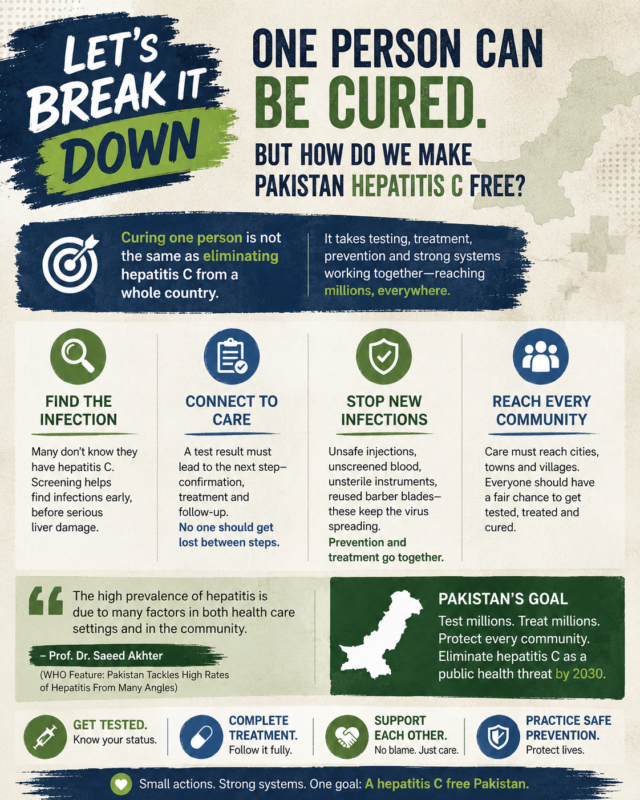
Curing one person and eliminating hepatitis from an entire country are very different challenges.
One patient needs the right test, treatment and follow-up. A country has to make that same path available to millions of people while also preventing new infections.
When we hear the words hepatitis elimination, it may sound as though every case must completely disappear.
In public health, elimination means reducing new infections and hepatitis-related deaths to very low levels through widespread prevention, testing and treatment.
Medicine is only one part of that work.
Many people with hepatitis C feel healthy and do not know they are infected. They may continue working and caring for their families for years while the virus quietly affects the liver.
If people do not know they have hepatitis C, they cannot begin treatment. This is why large-scale screening is so important.
The purpose of screening is not to frighten people. It is to find the infection early enough for treatment to prevent serious liver damage.
A screening test alone does not cure anyone.
Someone may receive a reactive result but still be unable to complete the next steps.
The PCR test may not be available nearby. The clinic may be far from home. Travel may be costly, or no one may clearly explain what the result means.
That person may have been counted as screened, but they are still not connected to treatment.
For elimination to succeed, people need a clear and practical path:
Services also need to reach people outside large hospitals. Families in villages and smaller towns should not have to travel long distances several times just to complete testing and receive medicine.
Pakistan can treat many people, but progress will remain limited if unsafe practices continue creating new infections.
Prevention and treatment have to happen together.
This includes:
These are the same issues discussed throughout this series.
The syringe, the blood bag, the dental tool, the barber blade, the PCR test and the treatment tablets are all connected. Each one is part of preventing hepatitis C or helping someone reach a cure.
While discussing Pakistan’s hepatitis burden in a WHO feature, Prof. Dr. Saeed Akhter said:
“The high prevalence of hepatitis is due to many factors in both health care settings and in the community.”
He pointed to unsafe syringes, inadequately screened blood, unhygienic dental instruments, reused barber blades and poor infectious-waste systems.
His point connects directly with hepatitis elimination.
Treating people who already have hepatitis C is essential. But if the practices causing new infections continue, more people will keep entering the same cycle.
Pakistan’s national hepatitis C elimination programme aims to test tens of millions of people and provide treatment to millions who are found to have the infection.
The size of that goal shows how much work is involved.
People must be reached in cities, villages and communities where healthcare services may be limited. Testing must be followed by confirmation, treatment and proper follow-up.
The programme cannot depend only on patients reaching a major hospital after they become seriously ill.
Screening and care have to reach people earlier.
Most people are not running a national health programme, but their actions still matter.
A person can accept screening when it is offered through a reliable programme.
After a reactive result, they can complete the PCR test instead of stopping halfway.
If treatment is prescribed, they can take the tablets for the full course and return for follow-up.
Families can support someone without blaming, frightening or isolating them.
Patients can also ask respectful questions about new syringes, screened blood and properly sterilized instruments.
A national programme may be designed by health authorities, but it can only work when people understand the process and are able to complete every step.
For one family, hearing that hepatitis C has been cured may feel like the end of a difficult experience.
For Pakistan, each cure is part of a much larger effort.
The medicines already exist. The harder challenge is making sure people are tested, correctly diagnosed, treated and protected from becoming infected again.
One person reaching a cure matters.
Making that same opportunity available to millions is how a country moves toward hepatitis elimination.
This article is part of our World Hepatitis Day educational series supporting hepatitis prevention, testing, treatment and elimination in Pakistan.