info@discoversouls.org
Subscribe to SMS Updates: (850) 308-3944
Supporting 190,000+ Patients Through Pakistan Kidney Institute (PKI)
Nusrat had heard about Hepatitis Filter Clinics, but she thought they were only for people with serious liver disease.
Someone in her family had recently tested positive for hepatitis. Nusrat felt healthy, but she wanted to know whether she should also be checked.
Her question was simple:
Yes. A Filter Clinic can be a starting point for testing, medical advice and follow-up. You do not have to wait until you feel weak or develop serious symptoms.
Nusrat is an example created around questions many families may have.
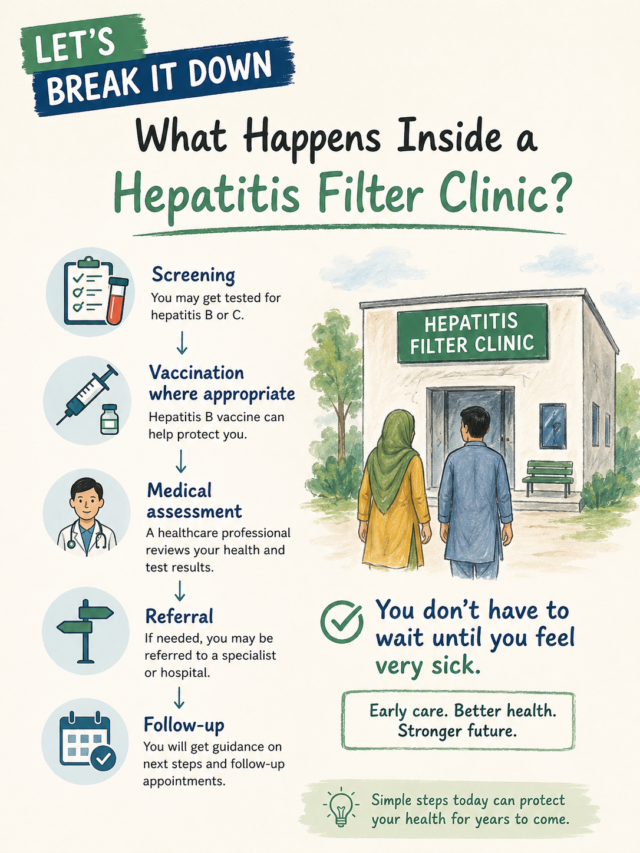
At the clinic, staff may first ask why you have come and review any reports you bring. They can guide you about screening for hepatitis B or C, especially when there may have been contact with blood through surgery, transfusions, dental treatment, repeated injections or other medical procedures.
Take your previous reports even when you do not understand them. Ask the healthcare worker to explain what they mean.
The team may also discuss hepatitis B vaccination. There is a vaccine that helps prevent hepatitis B, but there is currently no vaccine for hepatitis C. Whether you need the vaccine will depend on your age, previous vaccination and test results.
A useful question is:
“Do I or my children need the hepatitis B vaccine?”
A doctor or trained healthcare worker may then review your health history and results. Feeling well does not always mean there is no infection, because hepatitis B and C can remain unnoticed for years.
Some people may only need advice, another test or regular follow-up. Others may need treatment or a specialist’s opinion.
PKLI says its Filter Clinics provide screening, referral and follow-up for people affected by hepatitis B and C. Patients who need more advanced care may be connected with specialists at PKLI’s main hospital, including through telehealth.
A referral does not always mean the illness is severe. It may simply mean that another test or specialist review is needed.
Before leaving the clinic, make sure you understand what happens next:
Keep your reports together or take clear photographs of them on your phone.
Prof. Dr. Saeed Akhter has explained why care at the community level matters:
“The high prevalence of hepatitis is due to many factors in both health care settings and in the community.”
He has pointed to risks including reused syringes, unscreened blood, unhygienic dental instruments, reused barber blades and poor medical-waste handling.
PKLI states that it has established 18 Hepatitis Filter Clinics across Punjab to bring early hepatitis care closer to communities.
For Nusrat, visiting the clinic was not about expecting hospital admission. It was simply about understanding what she needed before the problem became more serious.
Before travelling, call to ask for the nearest clinic, its timing, whether an appointment is needed and which documents to bring.
PKLI contact number: +92 42 111 117 554
This article is part of our World Hepatitis Day educational series supporting prevention, early testing and access to hepatitis care in Pakistan.