info@discoversouls.org
Subscribe to SMS Updates: (850) 308-3944
Supporting 190,000+ Patients Through Pakistan Kidney Institute (PKI)
If you have family or friends in Pakistan, today’s message is especially important.
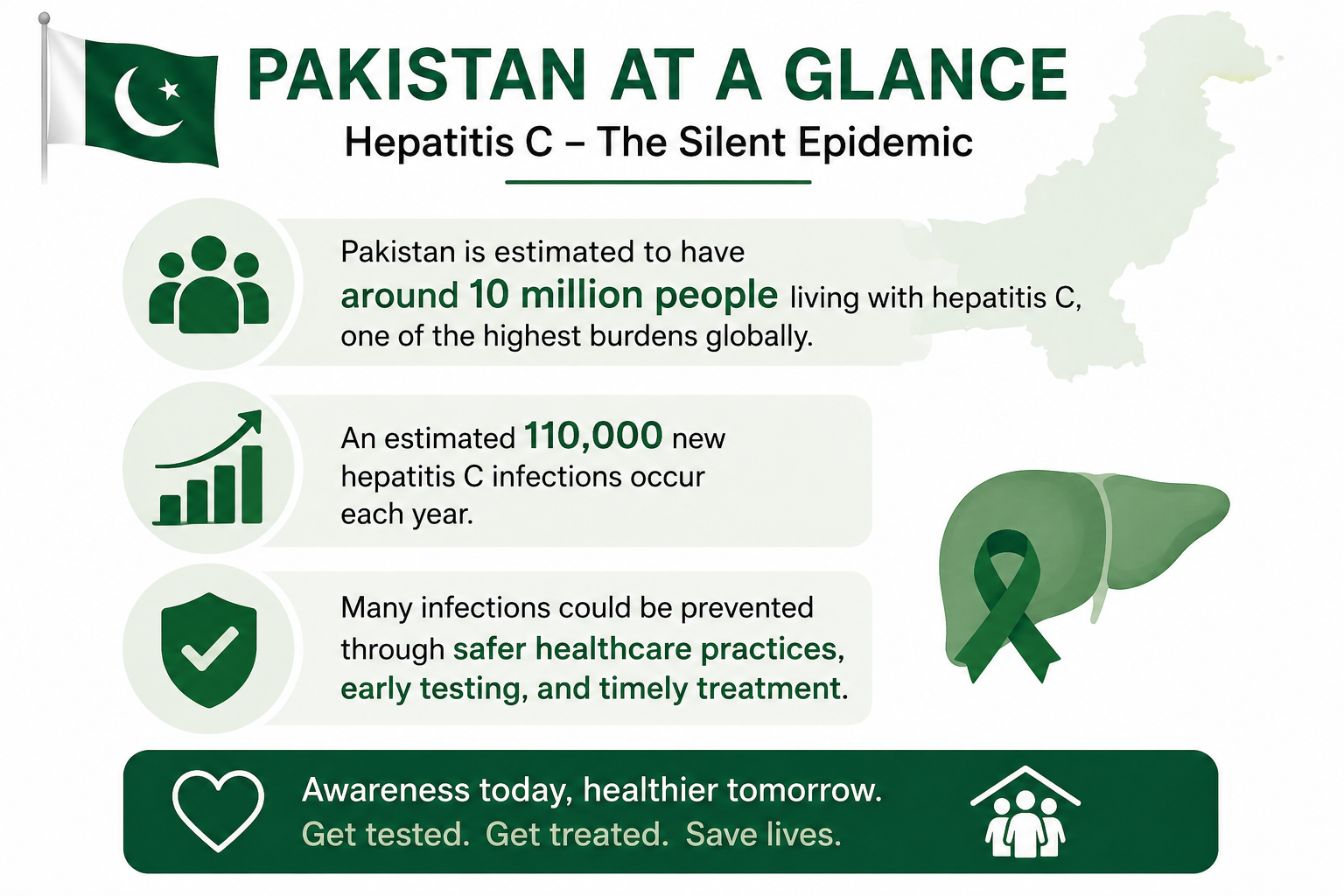
Many people are surprised to learn that Pakistan carries one of the highest hepatitis C burdens in the world. Yet hepatitis often receives far less attention than other major diseases.
The difficult part is that hepatitis C is often called a “silent disease.” Many people feel completely healthy and have no symptoms for years. By the time symptoms appear, serious liver damage may already have occurred.
So why has hepatitis become such a major public health challenge in Pakistan?
There isn’t just one reason.
Over many years, unsafe medical injections, unsafe blood transfusions in the past, limited awareness, delayed testing, and infection prevention challenges in some healthcare settings have all contributed to the spread of hepatitis C.
The encouraging news is that this story doesn’t have to end this way.
Today, hepatitis C is curable for most people with modern medicines. The earlier it is detected, the greater the chance of preventing cirrhosis, liver cancer, and other serious complications.
That is why awareness matters.
That is why testing matters.
And that is why we’re spending the next few weeks talking about hepatitis—one topic at a time.
Pakistan has launched the Prime Minister’s National Programme for the Elimination of Hepatitis C, supported by the World Health Organization (WHO) and partners.
The programme aims to:
According to WHO and Pakistan’s Ministry of Health, successful implementation of the programme could, by 2030:
These are more than numbers.
They represent parents, children, friends, and families whose lives could be changed through early diagnosis and treatment.
For more than a decade, Prof. Dr. Saeed Akhtar has consistently emphasized that hepatitis elimination requires more than treatment alone. It requires awareness, early diagnosis, expanded screening, and national commitment.
His words continue to inspire this mission:
“Pakistan carries one of the highest hepatitis C burdens in the world. Until we started organized, well-planned, nationwide efforts to eliminate hepatitis C, we would not be able to overcome this challenge.”
According to the WHO, every 30 seconds, someone in the world dies from hepatitis-related liver disease or liver cancer.