info@discoversouls.org
Subscribe to SMS Updates: (850) 308-3944
Supporting 190,000+ Patients Through Pakistan Kidney Institute (PKI)
What’s the difference between hepatitis B and hepatitis C?
Both hepatitis B and hepatitis C affect the liver and can lead to serious health problems if they are not diagnosed and treated early. One of the biggest challenges is that many people have no symptoms in the beginning, so they may not know they are infected.
Although they affect the same organ, there are some important differences.
Understanding these differences helps us make informed decisions about vaccination, testing, and treatment.
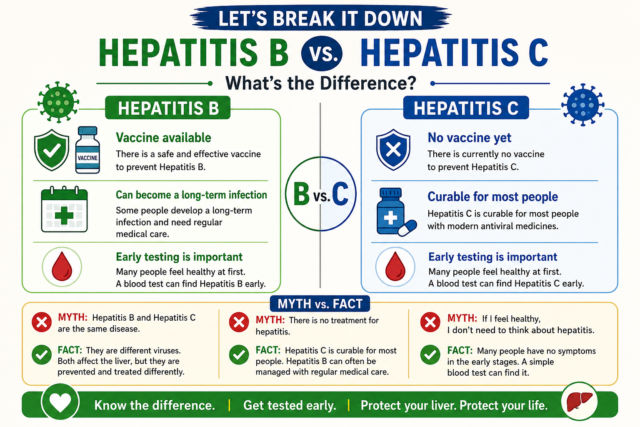
| Hepatitis B | Hepatitis C |
|---|---|
| ✅ Vaccine available | ❌ No vaccine yet |
| May become a long-term infection | Curable for most people with modern treatment |
| Early testing is important | Early testing is important |
❌ Myth: Hepatitis B and hepatitis C are the same disease.
✅ Fact: They are different viruses. Both affect the liver, but they are prevented and treated differently.
❌ Myth: There is no treatment for hepatitis.
✅ Fact: Hepatitis C is now curable for most people, and hepatitis B can often be managed successfully with ongoing medical care.
❌ Myth: If I feel healthy, I don’t need to think about hepatitis.
✅ Fact: Many people with hepatitis have no symptoms in the early stages. A simple blood test is often the only way to know if someone is infected.
It’s common to hear people mention hepatitis B and hepatitis C as if they are the same disease, but they are different.
Sometimes, learning one simple fact today can help prevent a serious illness tomorrow.