info@discoversouls.org
Subscribe to SMS Updates: (850) 308-3944
Supporting 190,000+ Patients Through Pakistan Kidney Institute (PKI)
A man stops at a free hepatitis screening camp.
He feels fine. He has no pain and no reason to believe anything is wrong.
A few minutes after giving a small blood sample, he is told:
He hears the word reactive but does not understand what it means.
“Do I have hepatitis C?”
“Is my liver damaged?”
“Will I need treatment?”
By the time he reaches home, everyone has advice.
One person tells him to start medicine immediately.
Another tells him not to tell anyone.
But no one explains the most important point:
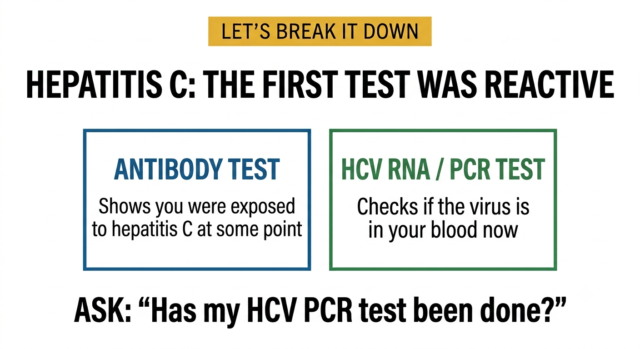
The first hepatitis C test usually looks for antibodies.
Antibodies are made by the body after it comes into contact with the hepatitis C virus.
A reactive antibody result means the person was exposed to hepatitis C at some point.
But it does not tell us whether the virus is still present in the body today.
Some people may have had hepatitis C in the past and cleared it. Others may have been treated and cured.
That is why another test is needed.
The next test is called an HCV RNA test. Many people know it as a PCR test.
This test checks whether the hepatitis C virus is currently present in the blood.
Patients do not need to remember every medical term.
They only need to ask:
After receiving a reactive result, a person may be given a prescription through WhatsApp or told to take the same medicine that helped a friend.
But a screening result alone should not decide treatment.
First, the PCR test should confirm whether the virus is currently present.
Then a qualified healthcare professional can explain the result and guide the patient toward the right care.
If hepatitis C is confirmed, it can now be cured in most people.
Modern hepatitis C treatment usually involves tablets taken for a relatively short time. More than 95% of people can be cured with these medicines.
So the right steps are simple:
Get screened.
Confirm the result with a PCR test.
Receive proper treatment if the virus is present.
A reactive screening result should not lead to panic.
It should lead to the next test.
That man did the right thing by getting screened.
But before assuming the worst or beginning medicine, he needed to ask:
The first test tells us whether the body has encountered hepatitis C.
The PCR test tells us whether the virus is still present.
And once we know that, the right care can begin.
This article is part of our World Hepatitis Day educational series supporting clear information, proper testing and connection to hepatitis care in Pakistan.