info@discoversouls.org
Subscribe to SMS Updates: (850) 308-3944
Supporting 190,000+ Patients Through Pakistan Kidney Institute (PKI)
One of the most frequently asked questions after a diagnosis of viral hepatitis is:
“Can hepatitis be cured?”
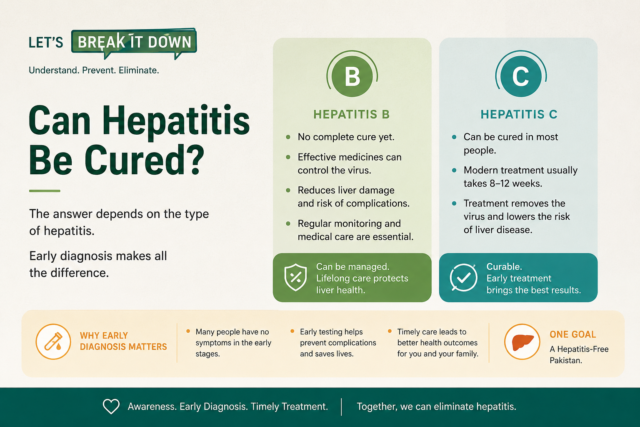
The answer depends on which type of viral hepatitis a person has.
Although hepatitis B and hepatitis C both affect the liver, they are caused by different viruses and require different approaches to treatment. Understanding this distinction is essential because it helps patients, families, and healthcare professionals make informed decisions about diagnosis, treatment, and long-term care.
Over the past two decades, advances in medicine have significantly improved the outlook for people living with viral hepatitis. While treatment options differ between hepatitis B and hepatitis C, early diagnosis remains the foundation of effective care.
At present, there is no complete cure for chronic hepatitis B. However, effective antiviral medicines are available for people who meet treatment criteria.
Treatment aims to:
Not everyone with chronic hepatitis B requires medication immediately. Treatment decisions are based on several factors, including liver function, the amount of virus in the blood, and evidence of liver damage. For some individuals, regular monitoring may be the most appropriate approach.
The treatment of hepatitis C has changed dramatically with the introduction of direct-acting antiviral (DAA) medicines.
Today, these medicines can cure hepatitis C in most people when treatment is completed as prescribed.
Most treatment courses last 8–12 weeks, although the exact duration depends on individual clinical circumstances.
Successful treatment removes the virus from the body, greatly reducing the risk of future liver complications and improving long-term health outcomes.
Whether someone has hepatitis B or hepatitis C, early diagnosis is one of the most important factors influencing long-term health.
Identifying infection before significant liver damage develops allows healthcare providers to:
Because many people experience no symptoms during the early stages of infection, hepatitis may remain undiagnosed for years unless testing is performed.
Pakistan continues to carry one of the world’s largest burdens of viral hepatitis.
While hepatitis C affects millions of people across the country, hepatitis B also remains an important cause of chronic liver disease, cirrhosis, and liver cancer.
Recent advances in treatment provide an important opportunity to reduce the impact of viral hepatitis. However, treatment can only begin after infection has been identified.
Expanding access to screening, strengthening public awareness, maintaining hepatitis B vaccination programs, and ensuring timely access to appropriate treatment are all essential components of Pakistan’s long-term strategy to eliminate viral hepatitis as a public health threat.
All types of hepatitis can be cured with the same medicine.
Treatment depends on the type of hepatitis. Chronic hepatitis B is usually managed through monitoring or antiviral therapy when appropriate, while hepatitis C can now be cured in most people with modern direct-acting antiviral medicines.
A hepatitis diagnosis means there is no hope.
Medical advances have transformed the care of viral hepatitis. With early diagnosis, appropriate treatment, and regular follow-up, many people are able to maintain good health and significantly reduce their risk of serious liver disease.
Scientific advances have changed what is possible in the fight against viral hepatitis.
Today, highly effective treatments, improved diagnostic tools, and stronger public health programs provide opportunities to reduce illness, prevent complications, and improve quality of life for millions of people.
Continued public awareness, early diagnosis, and access to evidence-based care remain essential to achieving the global goal of eliminating viral hepatitis as a public health threat.
A diagnosis of hepatitis should never be viewed as the end of the journey.
Understanding the type of hepatitis, seeking timely medical advice, and following an appropriate care plan can make a significant difference to long-term health.
Every person who learns about hepatitis, encourages testing when appropriate, and shares accurate information contributes to a healthier future.
Together, through prevention, early diagnosis, timely treatment, and public awareness, we move one step closer to one goal: a Hepatitis-Free Pakistan.
📌 This article is part of our World Hepatitis Day educational series, inspired by Prof. Dr. Saeed Akhtar’s long-standing commitment to hepatitis elimination in Pakistan. The content is written in original language and is based on guidance from internationally recognized public health authorities.