
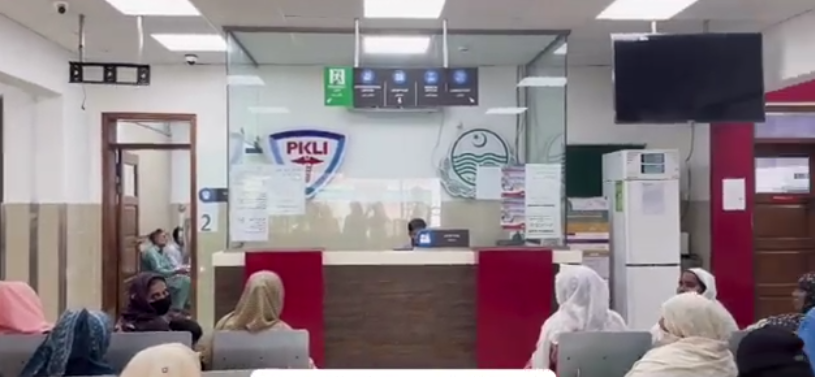
Hepatitis C remains one of Pakistan’s most serious health concerns, affecting millions of people across the country. In recent years, however, Pakistan has made real progress toward eliminating this disease through a coordinated national effort led by the Ministry of National Health Services, the World Health Organization (WHO), and the Pakistan Kidney and Liver Institute (PKLI).
The goal is clear: to eliminate Hepatitis C as a public-health threat by 2030. What makes this program stand out is its mix of strong political commitment, digital innovation, and community-level action—a model that other developing countries are already beginning to study.
Vision and Mission
The program’s vision is simple but powerful: stop new Hepatitis C infections and make sure everyone living with the disease can access safe, affordable, and effective treatment.
Its mission is to eliminate Hepatitis C nationwide by 2030 through:
- Expanding testing and early diagnosis
- Linking every diagnosed patient to free treatment
- Scaling the national electronic medical-record system (EMR)
- Building evidence for province-wide micro-elimination models
- Raising public awareness through education and prevention
National Leadership
The initiative is led by Prime Minister Muhammad Shahbaz Sharif and guided by the Ministry of Health, in collaboration with WHO, PKLI, and all provincial health departments.
Professor Dr. Saeed Akhter, Chairman of PKLI and member of the National Task Force for Hepatitis Elimination, has repeatedly emphasized that real success will come only through integrated care, transparency, and strong partnerships between the public and private sectors.
Among the provinces, Sindh has shown exceptional leadership, investing in staff training and ensuring that field teams are equipped to deliver testing and treatment at the community level.
The Digital Backbone
National Web-Based EMR
Developed by the Health Information and Service Delivery Unit (HISDU) in Punjab, Pakistan’s national EMR has become the backbone of the elimination program. It records every patient’s data under a unique CNIC, tracks treatment progress, and monitors medicine stocks.
Even in areas with weak internet connectivity, the system’s mobile app allows offline data entry. Sindh and Gilgit-Baltistan are already reporting live data, while Punjab is completing full integration. For the first time, Pakistan can view real-time, patient-level hepatitis data at the national scale.
Public Registration Portal
A new online portal now lets citizens self-register for free Hepatitis C screening and receive digital certificates confirming their test status. This simple step has made access to care faster, more transparent, and easier to track.
Progress in Numbers
As of July 2025, the national dashboard shows:
- 51,251 people registered
- 49,017 screened with point-of-care testing
- 4,465 POCT-positive
- 1,900 PCR-confirmed
- 894 patients started treatment
Provincial breakdown
- Sindh – 35,978
- Gilgit-Baltistan – 13,644
- Punjab – 219
- Balochistan – 6
Screening results
- Anti-HCV positive – 10.6 %
- HBsAg positive – 2.1 %
The numbers show both the magnitude of the challenge and the strength of Pakistan’s coordinated response.
Field Challenges
Implementation hasn’t been without difficulties. Teams face slow internet in remote areas, barcode and offline-entry glitches, low coverage from Lady Health Workers, and weather disruptions that affect field mobility. To address this, provinces are investing in better digital training, infrastructure upgrades, and larger on-ground teams.
Partnerships Driving the Effort
- Sindh Health Department – political support, field staff, and procurement of test kits
- DVH/CDC and Integral Global (IG) – technical guidance and project management
- The Health Foundation (THF) – ground-level implementation and EMR data capture
This collaboration between government, international partners, and NGOs has been critical in turning policy into practice.
The Economic Case
Eliminating Hepatitis C isn’t just good for public health—it makes financial sense.
WHO estimates that every dollar invested now will return about eleven dollars in long-term savings. If fully implemented, the program could prevent:
- 850,000 deaths
- 1.1 million new infections
- 620,000 liver-cancer cases
- 500,000 cases of cirrhosis
By 2037, direct healthcare savings alone are expected to outweigh the costs of the program.
Looking Ahead
Pakistan’s elimination strategy combines political will, advanced data systems, and compassion for those affected. It has already positioned the country as a global example of how technology and teamwork can change the course of a disease.
As Prof. Dr. Saeed Akhter reminded attendees during the national meeting:
“Behind every statistic is a human life. If we have a cure and fail to use it, we become part of the injustice.”
The next phase will focus on scaling up treatment completion, expanding digital coverage, and ensuring that no community is left behind.
Conclusion
The Prime Minister’s Hepatitis Elimination Program is proving that determined leadership, supported by modern tools and compassionate planning, can deliver real results. Pakistan’s commitment to ending Hepatitis C by 2030 is not only achievable—it’s already changing how healthcare is delivered across the nation.
