
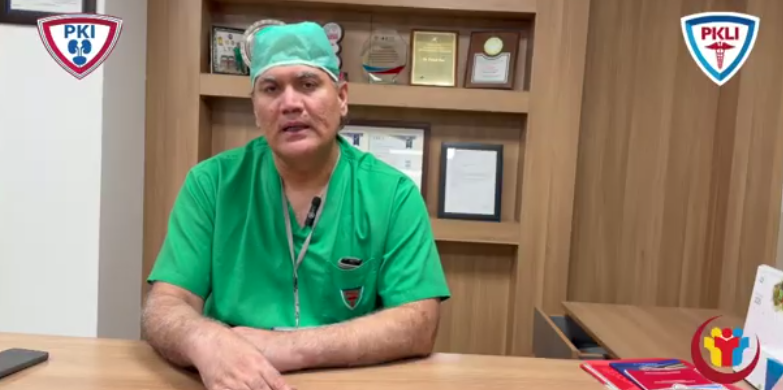
Meeting Prof. Dr. Faisal Dar at PKLI: Insights from a Leadership Interview
By Executive Director, Discover SOULS
As part of my professional work with Discover SOULS, a U.S.-based nonprofit focused on awareness and donor engagement for kidney and liver care, I visited the Pakistan Kidney & Liver Institute and Research Center (PKLI) in Lahore to record an interview and gain a deeper understanding of the institution’s leadership vision, clinical capacity, and long-term sustainability.
During this visit, I met Prof. Dr. Faisal Dar, a liver transplant, hepatobiliary, and pancreatic surgeon, who currently serves as Dean and Chief Executive Officer of PKLI. In our discussion, Prof. Dr. Faisal Dar shared the background and vision behind the institute. He explained that PKLI was conceived in 2015, alongside Prof. Dr. Saeed Akhter, the founder of the institution, with the goal of providing the highest quality medical and surgical care to patients suffering from liver and kidney diseases in Pakistan.
Prof. Dr. Faisal Dar explained that from the outset, PKLI was structured around four core pillars. The first was to deliver the best possible medical and surgical treatment to liver and kidney patients. The second was to establish a center of excellence for education and training of doctors, nurses, and paramedical staff. The third pillar focused on prevention, creating an environment to address liver and kidney diseases at the community level. The fourth pillar was the development of a center for cutting-edge research.
He shared that although PKLI began operations several years ago, its progress was temporarily slowed by political and judicial challenges, resulting in a difficult period of stagnation. With renewed government support in 2021, PKLI restarted its functions and, over the last four years, has developed into a comprehensive institution providing advanced medical and surgical care for liver and kidney patients across Pakistan.
On the clinical side, Prof. Dr. Faisal Dar stated that in the past four years PKLI has performed more than 1,000 living donor liver transplants and over 1,200 kidney transplants. In addition, the institute has carried out seven to eight deceased donor transplants, including liver, kidney, and pancreas transplants, and has more recently expanded into bone marrow transplantation. He emphasized that PKLI’s clinical outcomes are comparable to leading transplant centers internationally and that these results have been published in peer-reviewed medical journals.
Beyond clinical services, Prof. Dr. Faisal Dar highlighted PKLI’s focus on prevention and early intervention through a network of 18 filter clinics across 18 districts of Punjab, connected to the main PKLI campus in Lahore via telemedicine. These clinics not only treat hepatitis B and C but also work to educate communities about basic health, liver disease, and kidney disease awareness.
On the education and research front, Prof. Dr. Faisal Dar shared that all major disciplines at PKLI are recognized by the College of Physicians and Surgeons Pakistan for postgraduate training. These include fellowships in liver transplantation, kidney transplantation, interventional radiology, pathology, diagnostic radiology, gastroenterology, and transplant hepatology, along with multiple pathology disciplines. He also noted that PKLI launched its College of Nursing and Allied Health Professionals last year and is now preparing for its second session.
In research, Prof. Dr. Faisal Dar explained that PKLI has laid the foundation for a dedicated research department, maintains collaborations with local and international universities, and is recognized by the Drug Regulatory Authority of Pakistan to conduct Phase I to Phase III clinical trials.
A major milestone discussed during the interview was PKLI’s achievement of Joint Commission International (JCI) accreditation in November 2024, which he described as a global validation of the institute’s patient safety systems and quality standards.
Prof. Dr. Faisal Dar also spoke candidly about PKLI’s funding structure. He explained that the institute operates with a public mandate, with the government supporting approximately 60% of the budget, about 25% generated through institutional revenue, and the remaining funding arranged through philanthropic support. Currently, more than 50% of patients receive treatment completely free of cost, while a significant portion of others receive 80–90% subsidized care, and only about 20% of patients pay the full cost.
Hearing these details directly during the interview provided important context into how PKLI balances advanced, world-class care with accessibility and dignity for patients from all socioeconomic backgrounds. The conversation with Prof. Dr. Faisal Dar offered valuable insight into both the scale of PKLI’s work and the long-term planning required to sustain such an institution in Pakistan.
Disclaimer
This blog reflects observations from the visit and information shared by PKLI leadership during a recorded interview. It is written from the author’s professional perspective and does not represent an official statement or endorsement by Pakistan Kidney & Liver Institute or its leadership.
You can watch the full interview with Prof. Dr. Faisal Dar, recorded during this visit to Pakistan Kidney & Liver Institute (PKLI), here:
