
National strategies matter. Digital systems matter. Policies matter.
But public health only succeeds when it reaches people where they live.
Pakistan’s Hepatitis C elimination effort has entered a critical phase — where plans move beyond frameworks and dashboards and begin working in homes, clinics, and villages. While national leadership has laid the foundation, the real test of success is happening on the ground through pilot programs, community screening, and front line health workers.
This is where elimination becomes real.
Pilot Programs: Testing What Works on the Ground
Before expanding nationwide, Pakistan launched Hepatitis C elimination pilot programs in selected regions to test what works in real-world conditions — not ideal ones.
The pilot sites include:
-
Gilgit-Baltistan – successfully completed
-
Sindh (Kashmore District) – ongoing with encouraging results
-
Azad Jammu & Kashmir – planned
-
Balochistan – planned
These pilots rely on existing government health infrastructure, ensuring that the model can be scaled without creating parallel systems. The goal is to develop a practical approach that can work equally well in urban centers and remote areas.
Taking Screening to People’s Doorsteps
One of the most important lessons from these pilots is simple: waiting for patients to come forward is not enough.
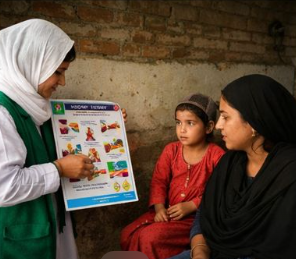
Instead, screening teams went door to door, supported by Lady Health Workers and local organizations. This approach has helped reach people who had never been tested before — many of whom were unaware they were at risk.
In pilot areas alone:
-
More than 31,000 individuals were screened
-
Everyone who tested positive received confirmatory testing
-
Free treatment was provided to eligible patients
This community-based model has been especially effective in areas where healthcare access is limited and stigma around hepatitis remains high.
Awareness That Speaks to Real Communities
Health awareness does not work when it ignores literacy, language, and trust.
Recognizing this, pilot programs used pictorial and mobile-based messaging rather than relying only on written materials. Simple visuals delivered through mobile phones helped communicate key messages in a way people could understand and relate to.
Local leaders also played a critical role:
-
Imams and madrassa teachers
-
Schoolteachers
-
Community elders
By involving trusted voices, awareness campaigns were able to reduce fear, address misconceptions, and encourage people to get tested without shame.
Digital Tools Supporting Field Teams
While technology often feels distant from rural healthcare, Pakistan’s Hepatitis Elimination Program has shown how digital tools can support — rather than complicate — fieldwork.
The national Electronic Medical Record (EMR) system allows:
-
CNIC-linked patient tracking
-
Documentation of screening, diagnosis, and treatment
-
Medicine stock monitoring
-
Offline data entry through a mobile app in areas with poor connectivity
For field teams, this means fewer lost records, better follow-up, and improved accountability. Data from Sindh and Gilgit-Baltistan is already flowing into the system, helping planners understand where gaps exist and where resources are needed most.
Challenges in the Field
Implementation at scale is never without obstacles.
Field teams have reported:
-
Slow or unreliable internet in remote regions
-
Barcode scanning and offline data entry challenges
-
Limited coverage of Lady Health Workers in some areas
-
Weather conditions that disrupt outreach activities
-
Stock management issues during high-volume screening
These challenges are being addressed through phased training, infrastructure improvements, and adjustments based on field feedback. Importantly, they are being acknowledged — not ignored — which is essential for long-term success.
Partnerships Making Implementation Possible
No single institution can eliminate Hepatitis C alone.
The pilot programs reflect strong collaboration between:
-
Sindh Health Department – political support, staffing, and procurement
-
DVH/CDC and Integral Global (IG) – technical assistance and monitoring
-
The Health Foundation (THF) – on-ground implementation and EMR data capture
This coordinated approach ensures that policy decisions translate into services that reach patients quickly and consistently.
What This Means for Families
Behind every screened individual is a family that may have lived for years with uncertainty. Early detection prevents advanced liver disease, liver cancer, and the devastating financial and emotional burden that comes with late-stage illness.
When treatment is provided early — and free of cost — families are spared years of suffering that could have been avoided.
This is the quiet impact of elimination work: fewer emergencies, fewer hospital admissions, and more lives lived with dignity.
Looking Ahead
Pakistan’s elimination strategy combines political will, advanced data systems, and compassion for those affected. It has already positioned the country as a global example of how technology and teamwork can change the course of a disease.
As Prof. Dr. Saeed Akhter, President, Pakistan Kidney Institute (PKI); Chairman, Pakistan Kidney and Liver Institute (PKLI); and Member, Prime Minister’s Task Force for Hepatitis C Elimination (JMC & RC), reminded attendees during the national meeting:
“Behind every statistic is a human life. If we have a cure and fail to use it, we become part of the injustice.”
The next phase will focus on scaling up treatment completion, expanding digital coverage, and ensuring that no community is left behind.
Conclusion
Pakistan’s Hepatitis C elimination effort is no longer just a national plan — it is a lived reality in communities where screening teams knock on doors, health workers explain tests patiently, and treatment becomes accessible to those who once felt forgotten.
Elimination does not happen all at once. It happens one household at a time, one test at a time, and one treated patient at a time.
As pilot programs expand and lessons are applied nationwide, they offer a clear message: when policy is paired with community trust and practical systems, meaningful change becomes possible.
This article is based on publicly shared information and discussions from Pakistan’s World Hepatitis Day 2025 commemoration.
Suggested Hashtags:
#HepatitisFreePakistan2030 #SOULSUSA #PublicHealth #CommunityHealth #HepatitisC #HealthEquity
