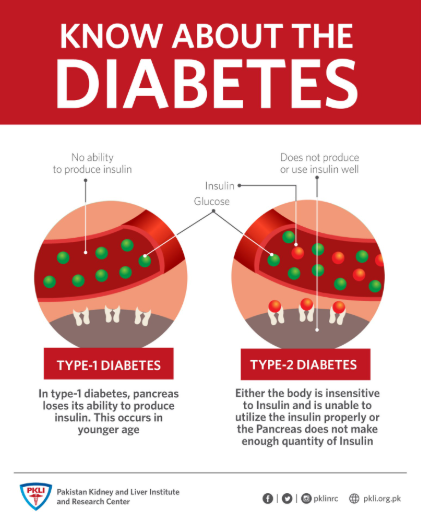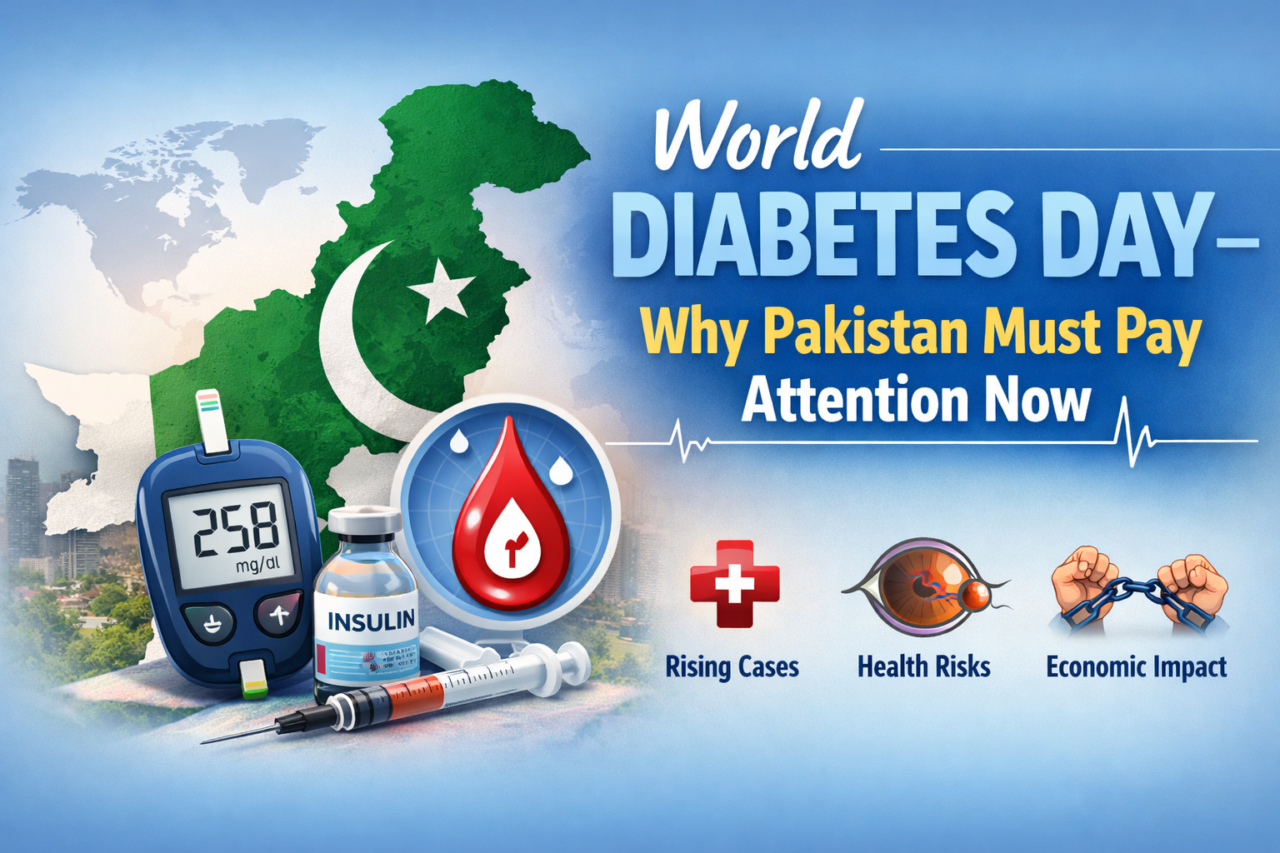
November 14th comes around every year as World Diabetes Day. For Pakistan, though, this isn’t just another date on the health calendar. It’s a reminder of something that’s already unfolding in homes across the country.
Diabetes has become one of the leading causes of kidney failure, heart disease, blindness, and disability here. Yet somehow, it remains one of the most misunderstood conditions. People think they know what it is, but most don’t really grasp what they’re dealing with until it’s too late.
It’s Not Really About Sugar
Prof. Dr. Saeed Akhter has this way of explaining things that cuts through all the confusion: “Diabetes is not a sugar problem; it is a blood-vessel problem.” That single sentence explains why this disease is so dangerous. It’s not just about avoiding mithai or checking blood sugar occasionally. Wherever blood flows—and that’s literally everywhere—diabetes can cause long-term damage. Kidneys, heart, eyes, nerves, feet. All of it.
More than 30 million Pakistanis are living with diabetes right now. But what’s even more concerning is the estimated 30 million who have prediabetes without knowing it. They’re going about their lives, feeling completely fine, while the disease quietly progresses. As Dr. Saeed often says, “the most dangerous patient is the one who doesn’t know he has diabetes.” Because by the time symptoms appear, significant damage has usually already occurred.
The Stage Everyone Misses
Prediabetes is where things could actually be stopped, but most people miss it entirely. Blood sugar levels are higher than normal but not quite in the diabetes range yet. No symptoms. No warning bells. Just ordinary life continuing as usual.
But without changes, prediabetes typically progresses to full diabetes within a few years. Research shows this pattern again and again. The frustrating part is that this stage is reversible. Weight loss, regular walking, dietary changes—these aren’t fancy medical interventions. They’re basic lifestyle adjustments that can genuinely prevent diabetes from developing.
The problem is nobody’s getting tested at this stage. People wait until something goes wrong.
Why Are Pakistanis at Such High Risk?
The lifestyle patterns here don’t help. Expanding waistlines, minimal physical activity, chronic stress, irregular sleep, and diets loaded with white flour, fried foods, and sugary drinks. Then there’s the genetic factor—diabetes runs strong in Pakistani families, and it shows up 10 to 15 years earlier here compared to Western countries.
This means people in their early thirties are already at risk. Young adults who should be in their prime are walking into the danger zone without realizing it. That’s not normal, and it should worry everyone.
The Damage Compounds Quietly
What makes diabetes particularly dangerous is how it works over time. The kidneys start declining gradually. The heart weakens. Vision deteriorates. Nerves stop functioning properly. Feet develop problems that lead to amputations.
Visit any dialysis center in Pakistan. A significant portion of those patients are there because diabetes went uncontrolled for years. Dr. Saeed makes this point repeatedly: “Most complications of diabetes are preventable, but they are not reversible once the damage begins.”
That’s the brutal reality. Prevention works. Reversal doesn’t. Once organs are damaged, once nerves are destroyed, that’s permanent. But catching it early? That changes everything.
Testing Shouldn’t Wait for Symptoms
Anyone over 30 should be getting tested regularly, regardless of how they feel. Diabetes doesn’t announce itself with obvious symptoms early on. That’s precisely why it’s so dangerous.
A simple fasting blood sugar test or HbA1c test once a year can detect problems before they become serious. For those with risk factors—excess weight, high blood pressure, gestational diabetes history, strong family history—testing should start even earlier.
There’s this tendency to wait until something feels wrong before seeing a doctor. But with diabetes, by the time something feels wrong, years of damage may have already accumulated.
Lifestyle Isn’t Optional
Medications help manage diabetes, but they can’t overcome a lifestyle that actively promotes the disease. This is where a lot of people get it wrong. Pills alone won’t fix the problem.
Regular walking, reducing refined carbs and sugar, managing weight, getting adequate sleep, controlling stress—these form the foundation of diabetes management and prevention. Dr. Saeed puts it clearly: “No medicine can work if your lifestyle is working against you.”
It’s not about perfection. It’s about consistent, reasonable changes. But those changes have to actually happen. Otherwise, the medication is fighting a losing battle.
The Follow-Up Gap
There’s a common pattern in Pakistan: someone gets diagnosed, starts treatment, feels improvement after a few weeks, and then disappears from medical follow-up. Appointments get skipped. Tests get postponed. The assumption is that feeling better means the problem is solved.
But diabetes changes over time. Age affects it. Weight fluctuations affect it. Stress levels, kidney function, heart health—all of these influence how the disease progresses and how treatment needs to be adjusted. Regular monitoring through eye exams, kidney function tests, cholesterol checks, and HbA1c readings is what prevents silent complications from advancing undetected.
A National Health Challenge
World Diabetes Day exists to remind countries that this isn’t just a personal medical issue. It’s a public health challenge that affects entire nations. For Pakistan, reducing rates of kidney failure, heart attacks, strokes, and amputations starts with addressing diabetes at its source.
Early screening catches the disease when it can still be managed effectively. Lifestyle modifications prevent it from progressing. Proper medical treatment keeps it under control. Regular monitoring stops complications before they become severe. None of this is mysterious or impossible. It just requires actually doing it.
The core message remains straightforward: diabetes can be controlled, and its worst complications can be prevented. But that window exists before major damage occurs, not after. Once kidneys fail or nerves die or vision is lost, prevention is no longer an option. Management of permanent disability becomes the only choice left.
So when November 14th rolls around this year, maybe it’s worth thinking about more than just awareness. Testing matters. Prevention matters. Follow-through matters. For a country where over 60 million people are either diabetic or prediabetic, this isn’t abstract health messaging. It’s about whether millions of people will face preventable suffering in the coming years, or whether early action today spares them that fate.
Right now, diabetes is winning. That doesn’t have to continue.